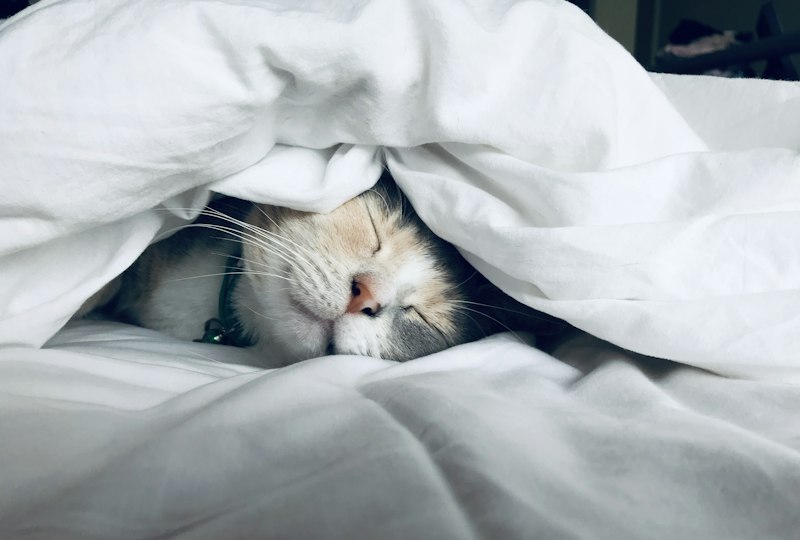
Why Students Sleep So Badly
University students average 6 to 7 hours of sleep per night — below the recommended 7 to 9 hours. The consequences are significant: impaired memory consolidation, reduced immune function, worse academic performance, and increased risk of anxiety and depression.
The irony: most students sacrifice sleep to study more, when sleep is itself one of the most powerful study tools available. Memory consolidation happens primarily during sleep.
The Circadian Rhythm
The circadian rhythm is a roughly 24-hour biological cycle driven by the suprachiasmatic nucleus (SCN) in the hypothalamus. Light is the most powerful regulator of sleep timing. Getting bright light in the morning and reducing light exposure in the evening will do more for your sleep quality than almost any supplement.
Blue Light: The Real Problem
Blue-wavelength light from screens suppresses melatonin because the photoreceptors in the eye are most sensitive to blue wavelengths. Use blue light filters in the evening and ideally stop using screens 30 to 60 minutes before bed.
Caffeine: The Half-Life Problem
Caffeine has a half-life of approximately 5 to 7 hours. A coffee at 3pm still has half its caffeine at 8-10pm. Stop consuming caffeine by 2pm if you want to sleep by 11pm.
A Practical System for Students
Fix your wake time first — not your bedtime. Getting up at the same time every day is the single most powerful thing you can do for sleep consistency. Avoid long naps after 3pm. Get outside in the morning. Stop caffeine at 2pm. Dim your screens after 9pm. Keep your bedroom cool and dark.
Filed under

Written by
Stephen Kelechi Imo
Biomedical Science Student · Coventry University
First-year Biomedical Science student at Coventry University, writing about AI tools, student life, and the science of staying productive. Originally from Nigeria, now navigating UK university life — one lab session at a time.
Read more about Stephen →